Pricing Strategy — Reading the Market
You've got a lead to send. There are 8 roofers in the area, all paying different fees. Who do you pick? Here's how to think about it like a pro.
How Lead Pricing Works (Quick Refresher)
The receiver sets the price. Each contractor decides what they'll pay per lead — their "lead fee" — and it shows on their profile. As a sender, you browse contractors and pick who to sell to based on fee, trust signals, and fit.
You're not negotiating. You're shopping. The fees are already posted.
How to Browse and Compare
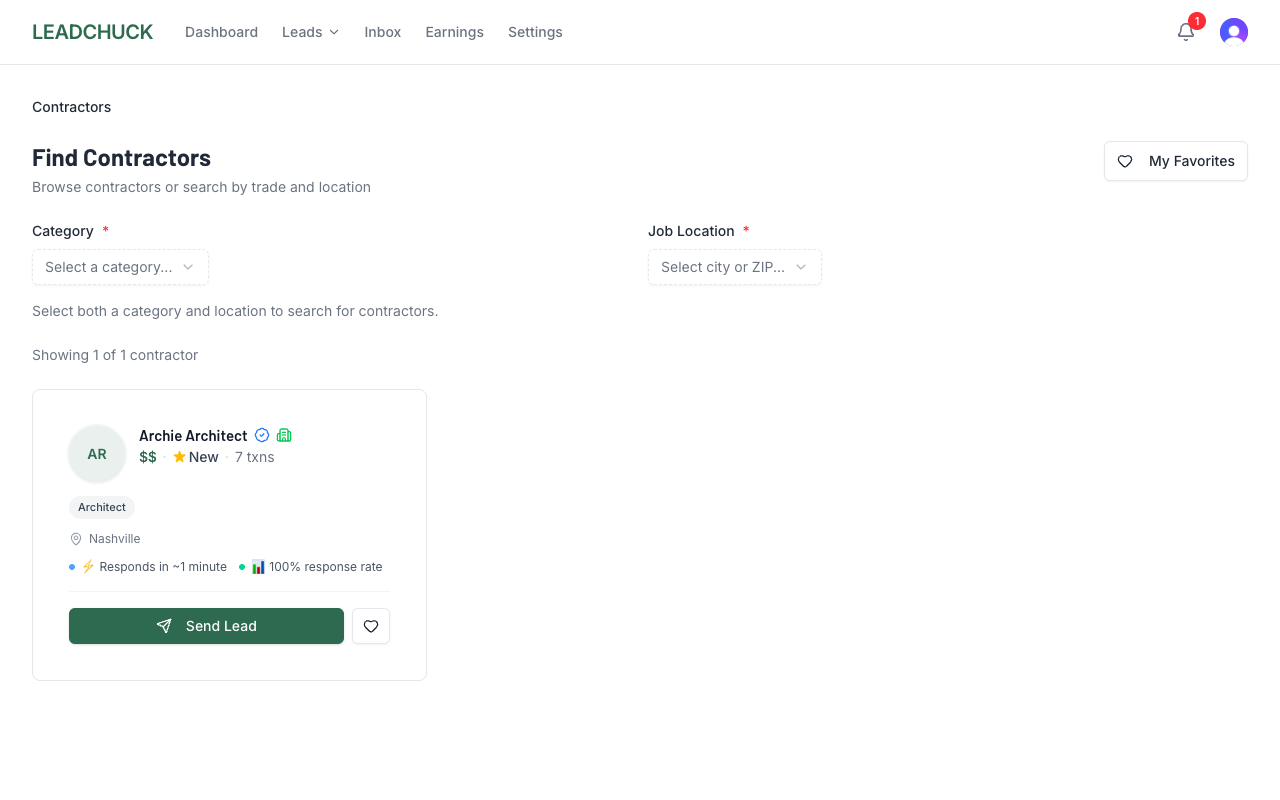
When you start sending a lead and search for contractors, each result shows:
- Lead fee— What you'll earn if they accept ($25, $50, $75, $100, etc.)
- Trust level — Their verification status and badges
- Ratings — Star rating from other senders
- Service area — Cities and ZIP codes they cover
High Fee vs. High Acceptance — The Trade-Off
Here's the thing most new senders get wrong:
🎯 The Math That Matters
Contractor A: $100 lead fee, accepts 50% of leads → Expected value = $50 per lead sent
Contractor B: $50 lead fee, accepts 90% of leads → Expected value = $45 per lead sent
Close, right? But here's the kicker — Contractor A's rejections can hurt your acceptance rate and slow your climb to Verified. Contractor B is the safer bet for building your reputation.
Category and Location Matter
Contractors in different trades tend to set different lead prices based on their typical job values. A roofer might set a higher fee than a handyman because their average job size is larger. But each contractor sets ONE price for all their leads.
- Trade category: Roofing and HVAC contractors often set higher lead prices because their average job is $8,000+. Handyman contractors might set lower prices because jobs are smaller.
- Location: Contractors in Nashville or Austin pay differently than contractors in rural areas. More competition = higher fees to attract leads.
Browse the contractor page for your area to get a feel for the going rate. If most roofers are paying $50-75 and one is paying $150, they might be desperate — or they might be really picky about what they accept.
Build Your Go-To List
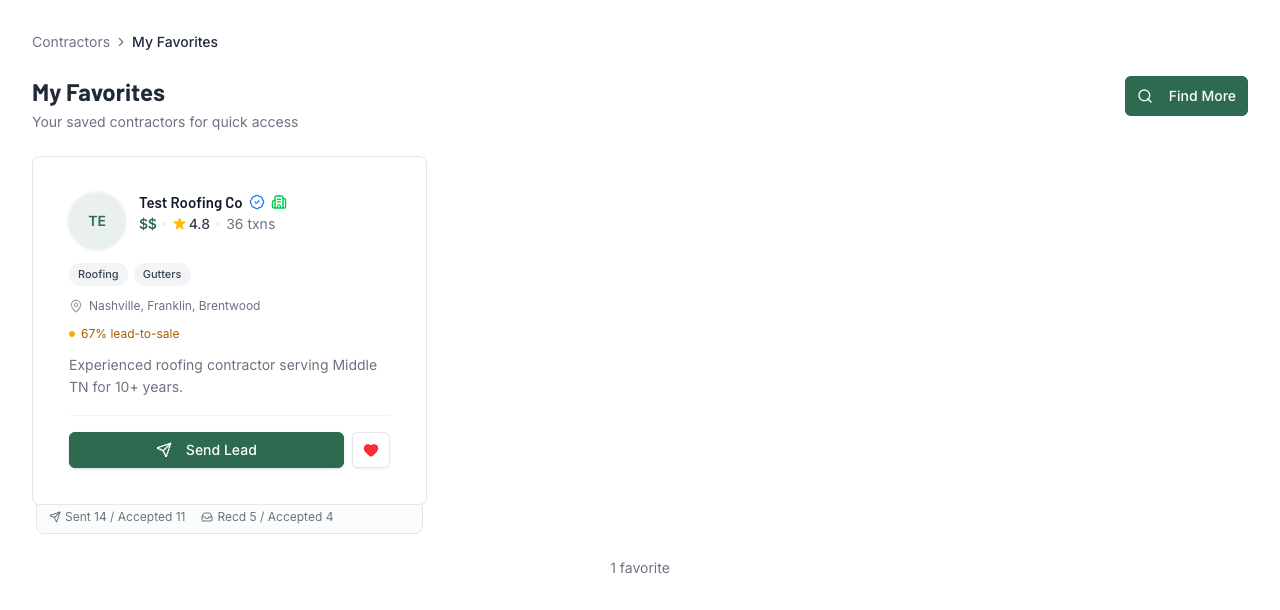
The best senders don't browse every time. They build a favorites list of 3-5 trusted contractors per trade. When a referral comes in, they already know exactly who to send it to.
How to build your list:
- Send a test lead. Pick someone who looks good on paper and send them a solid referral.
- See how they handle it. Did they accept quickly? Did the client say they were professional? Did the job close?
- Add them to favorites.Hit the favorite button on their profile so they're one click away next time.
- Repeat. Build up 3-5 per category you commonly refer.
Relationships Beat Transactions
LeadChuck works best when you build real relationships with contractors you trust. Once you've found a great roofer who accepts consistently, treats your clients well, and pays a fair fee — that's your go-to roofer. You send them every roofing lead. They know your leads are quality. Everybody wins.
Over time, these contractors may even start sending leads back to you. That's how networks grow.
💡 Pro Tips
- Don't just chase the highest fee. A contractor paying $50 who accepts 90% of leads is better than one paying $100 who rejects half. Your rejection rate matters.
- Build a favorites list of 3-5 per trade. When you get a referral, you should know exactly who to send it to without browsing.
- Watch for patterns. If a contractor starts rejecting more than usual, they might be overbooked. Switch to your backup for a while.
- The best-paying contractor isn't always the best choice.Think about the client experience too. If you send your neighbor to a contractor and they do a terrible job, that's on you.