Understanding Rejection Rates
Not every lead gets accepted. That's fine — what matters is whyit got rejected. Here's how rejection categories work and what actually hurts your stats.
The Three Rejection Categories
When a contractor rejects your lead, they pick a reason. That reason falls into one of three categories — and only one of them counts against you.
This one hurts. The lead itself had a problem:
- Wrong or disconnected phone number
- Fake or inaccurate contact info
- Client says they never requested service
- Client already hired someone
Doesn't count against you. Mismatch, not bad faith:
- Wrong service area
- Wrong trade category
- Job too small or too large for the contractor
Doesn't count against you.The contractor can't take it right now:
- Too busy / at capacity
- On vacation
- Not taking new clients
How Your Rejection Rate Is Calculated
Simple math:
Rejection Rate = Category A Rejections ÷ Total Leads Sent
Category B and C rejections are excluded from the calculation. They don't help you, but they don't hurt you either.
What the Thresholds Are
- Verified status: Needs ≤30% Category A rejection rate (plus 5+ accepted leads)
- Trusted status: Needs ≤20% Category A rejection rate (plus 20+ accepted leads and 90 days)
If your rate climbs above the threshold for your current trust level, you can get demoted. A Verified sender who hits 35% Category A rejections could drop back to New Member — and that means 30-day holds again.
Your Rate Is Climbing — Now What?
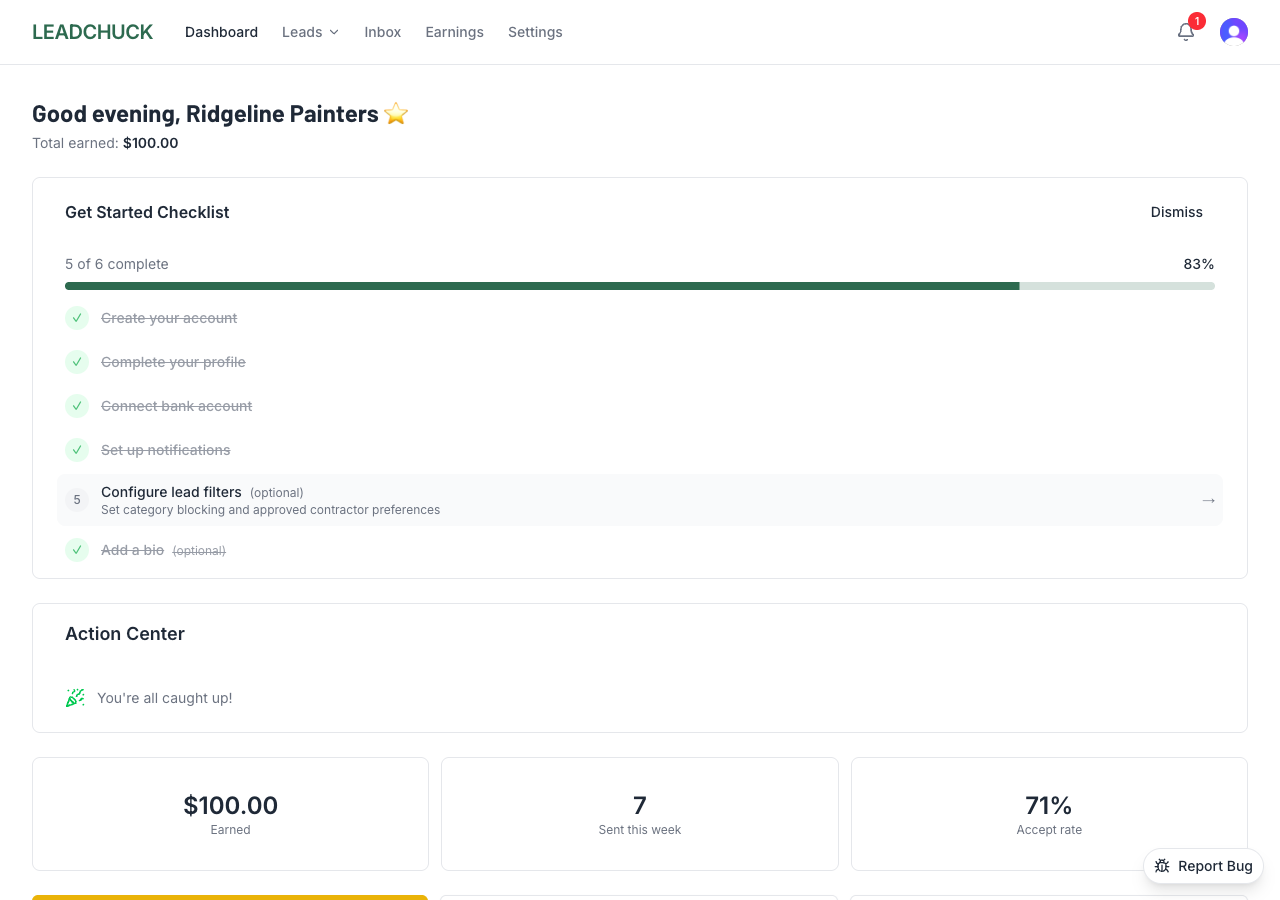
If you notice your acceptance rate dropping (check your dashboard — it's front and center), ask yourself:
- Am I sending to the right categories? A painting lead sent to a plumber is an easy Category B reject. Not a stat-killer, but a wasted lead.
- Is the client info accurate? Double-check phone numbers before sending. Wrong numbers are the #1 Category A rejection reason.
- Am I including enough detail? Vague leads are harder to evaluate. More info = easier accept decision for the contractor.
- Am I sending to the right area?Check the contractor's service area before sending. A lead 50 miles outside their range is a reject.
- Is the client actually interested?Don't send leads from people who were just casually asking. Wait until they're actually ready for a quote.
💡 Pro Tips
- Category C rejections are fine.If a contractor rejects because they're too busy, that's on them — not you. Your stats are safe.
- Check your stats regularly. The accept rate is right on your dashboard. If it starts trending down, slow down and focus on quality over quantity.
- Ask before you send.If you're unsure whether a contractor wants a particular type of lead, build a relationship first. Add them to favorites and learn what they actually want.
- One bad stretch doesn't ruin you. Your rate is based on your overall history. A few Category A rejections early on can be offset by a run of solid accepted leads.